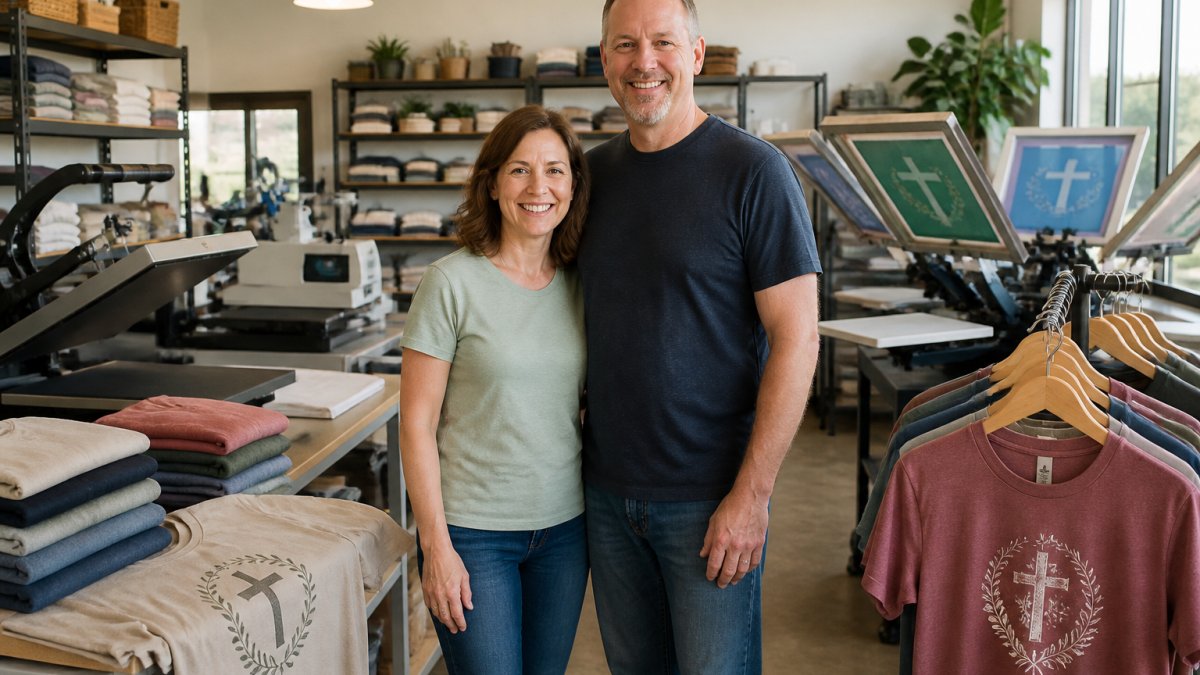
 comparison
Durable Christian T-Shirt Printing Methods Compared
Table of Contents
- Why Christian T-Shirt Printing Durability Matters
- Printing Methods at a Glance: Quick Comparison
- Screen Printing: The Standard for Bulk Orders
- Direct-to-Garment (DTG) Printing for Detailed Artwork
- Direct-to-Film (DTF) Printing for Fabric Flexibility
- Sublimation and Heat Transfer Vinyl (HTV)
- What Is the Most Durable T-Shirt Printing Method?
- Screen Printing vs DTF: Which Lasts Longer?
- How to Wash Printed T-Shirts to Extend Their Life
- Bringing Faith and Quality Together
- Frequently Asked Questions
Last Updated: October 9, 2026
Why Christian T-Shirt Printing Durability Matters
A shirt that fades or peels after a few washes stops doing its job. When you wear a Christian t-shirt, you want the message to stay as strong as the day it arrived. That is why christian t-shirt printing methods that stay durable matter so much to us at Sweetpea Manor Designs.
We are a small mom-and-pop shop, and we hear the same story often: someone bought a faith shirt elsewhere, washed it a handful of times, and watched the design crack and fade. It is frustrating, and it is avoidable. The printing method, the ink, and the curing process decide whether a design survives fifty washes or five.
Below, we break down each major printing method and how it holds up. This guide covers what actually keeps a print on a garment.
Printing Methods at a Glance: Quick Comparison
Here is how the main methods stack up for durability, detail, and fabric fit.
| Method | Durability | Best Fabric | Best For |
|---|---|---|---|
| Screen printing | Very high | Cotton | Bulk orders, bold designs |
| DTG | Moderate | Cotton | Detailed, full-color art |
| DTF | High | Cotton, polyester, blends | Flexible fabric needs |
| Sublimation | High on polyester | Polyester | All-over, light colors |
| HTV | Moderate | Cotton, blends | Small batches, names |
Each method has a place. The right choice depends on your fabric, your quantity, and how detailed your design is.
Screen Printing: The Standard for Bulk Orders
Screen printing is the workhorse of durable christian t shirt printing methods. It pushes thick plastisol or water-based ink through a mesh screen, then cures it with heat so the ink bonds to the cotton fibers.
For bulk production, nothing beats it. Church groups, ministry teams, and family reunions order in batches, and screen printing keeps the cost per print low at volume. The trade-off is setup time: each color needs its own screen, so simple designs with few colors work best.
- Pros: Excellent wash-fastness, vibrant color, low cost at high volume
- Cons: High setup cost, limited color count, best on cotton
Direct-to-Garment (DTG) Printing for Detailed Artwork
DTG printing works like a specialized inkjet printer for fabric. It sprays water-based ink directly onto the garment, which makes it the best printing method for detailed designs with many colors and gradients. There is no screen setup, so small orders and one-off designs are easy, a real advantage for a small mom-and-pop shop like ours, where every order can be different.
The durability story is more nuanced than most guides admit. DTG ink is water-based, so it bonds to cotton fibers through a pretreatment solution and a curing step. Skip either one and the print will fade, crack, or wash out. When both are done correctly, a DTG print on 100% cotton can hold up well before noticeable fading.
Fabric composition matters here too. 100% cotton takes DTG ink best because the fibers absorb the water-based ink. Polyester blends can dull the color vibrancy because the ink sits on the surface instead of soaking in.
- Pros: No setup cost, unlimited colors, great for photos and fine detail, ideal for one-off Scripture designs
- Cons: Moderate wash-fastness, best on cotton, slower per shirt, depends heavily on pretreatment and curing
A common pattern in DTG failures is under-curing: the ink feels dry to the touch but has not fully bonded, so it flakes off after a few washes. We cure every DTG piece fully before it ships, because a faith shirt that fades is a message that fades with it.
Direct-to-Film (DTF) Printing for Fabric Flexibility
DTF printing prints your design onto a special transfer paper, dusts it with adhesive powder, and heat-presses it onto the garment. The result is a flexible, durable print that works on cotton, polyester, and blends.
That fabric flexibility is DTF's biggest advantage. If you want one design that works across a mixed order of tees and hoodies, DTF handles it. The ink adhesion is strong when cured properly, and the print stretches with the fabric instead of cracking.
- Pros: Works on many fabrics, durable when cured, no color limits
- Cons: Slightly thicker hand-feel, quality depends on the transfer paper and press
Sublimation and Heat Transfer Vinyl (HTV)
Sublimation turns solid ink into gas that bonds with polyester fibers, so the color becomes part of the fabric. It never cracks or peels because there is no layer sitting on top. The catch: it only works on light-colored polyester, and cotton will not hold the dye at all.
HTV is a cut vinyl film applied with a heat press. It is ideal for small batches, names, and simple shapes. Durability is good when pressed correctly, but edges can lift over time if the curing temperature and pressure are off.
- Sublimation: Best for polyester, all-over prints, permanent color
- HTV: Best for small runs, personalization, simple designs
What Is the Most Durable T-Shirt Printing Method?
The most durable t-shirt printing method is often considered screen printing on 100% cotton. The thick ink layer and proper curing process can create a bond that resists cracking and fading through many wash cycles.
DTF is a close second, especially on blended fabrics, because the transfer stretches with the garment. Sublimation is essentially permanent on polyester, but its fabric limits hold it back for cotton lovers.
Screen Printing vs DTF: Which Lasts Longer?
Screen printing can last longer on cotton, while DTF can hold up better across mixed fabrics. Both survive regular washing when cured correctly, but they fail in different ways.
Wash-cycle reality. A properly cured screen print on 100% cotton is the durability benchmark: most practitioners report it holding color and adhesion well past 50 home wash cycles, often 70 or more, before any visible cracking. A properly cured DTF transfer typically lands in the 40-to-60 wash range on cotton and holds up similarly on polyester blends, because the transfer stretches with the fabric instead of fighting it. Sublimation on polyester is effectively permanent, it will outlast the garment itself, but it only works on light-colored polyester.
Why prints fail. Screen prints tend to crack when the ink was under-cured or the ink layer was laid too thick. DTF prints tend to peel at the edges when press pressure was uneven or the adhesive powder was under-applied. In both cases, the failure is a production issue, not a flaw in the method itself. This is where a careful printer makes all the difference.
The angle most guides skip: environmental footprint. Screen printing uses plastisol inks that contain PVC and phthalates, and each color requires its own screen that must be cleaned with solvents, a real waste stream at scale. Water-based screen printing is cleaner but harder to run. DTG uses water-based inks with far less chemical waste, but it consumes significant water in pretreatment. DTF uses plastic transfer film that becomes waste after pressing, though the film is thin and the process wastes little ink. Sublimation uses dye that becomes part of the fabric with essentially zero post-press waste, but it is limited to polyester. There is no zero-impact method, the honest answer is that the most durable method is also the most sustainable one, because a shirt that lasts 70 washes replaces three shirts that last 20.
How to Wash Printed T-Shirts to Extend Their Life
Washing printed t-shirts correctly can help extend their lifespan. Turn the shirt inside out, wash in cold water on a gentle cycle, and skip the dryer. Heat can be detrimental to print methods.
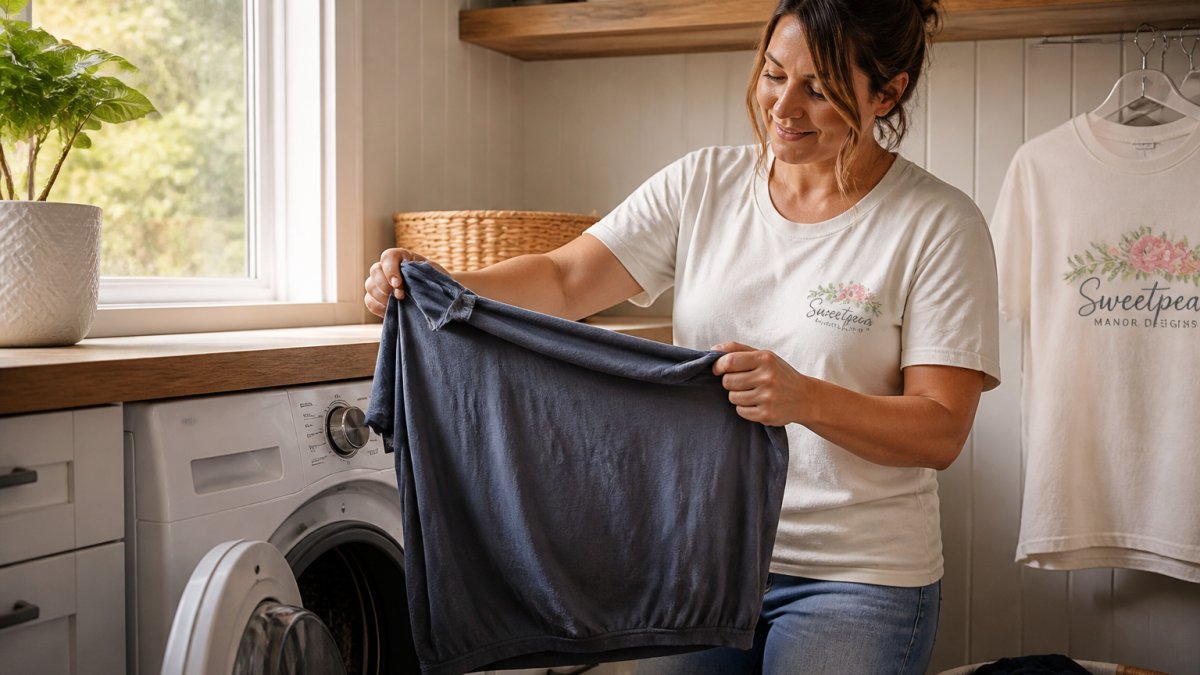
Follow these steps to protect the print:
- Turn the garment inside out before washing
- Use cold water on a gentle or delicate cycle
- Avoid bleach and fabric softener
- Hang dry or tumble on low heat
- Iron on the reverse side, never directly on the design
For more on garment care and textile standards, the American Cleaning Institute's fabric care guidance offers practical washing advice. Following garment care instructions is the single easiest way to protect your investment.
Bringing Faith and Quality Together
Every method above can produce a shirt worth wearing, as long as the printer respects the curing process and the fabric. That is the standard we hold ourselves to at Sweetpea Manor Designs.
As a small mom-and-pop business, we believe your faith apparel should last. Our autumn and Christmas collections are here for the holiday season, and our product list keeps growing. Ordering is easy across our Shopify store, our Etsy shop, our main website on Printify, eBay, and TikTok. From Scripture-inspired tees to personalized gifts, we are here to help you share your faith with the world.
Frequently Asked Questions
What is the most durable t-shirt printing method?
Screen printing generally produces long-lasting prints, especially on bulk orders with limited colors. Plastisol ink bonds deeply into cotton fibers, resisting cracking and fading through many wash cycles. DTF printing is a close second for cotton-polyester blends. For Christian t-shirt printing, screen printing works well for church group orders, while DTF suits varied fabric types and colorful Scripture designs.
What is more durable, DTF or screen printing?
Screen printing can outlast DTF on pure cotton garments because plastisol ink cures into the fabric rather than sitting on top. DTF transfers can crack or peel if the heat press temperature or pressure is off. However, DTF holds up better on polyester blends and detailed artwork. For screen printing vs DTF, choose screen printing for solid-color bulk designs and DTF for multi-fabric flexibility.
How can you make a printed Christian T-shirt last longer?
Wash printed t-shirts inside out in cold water on a gentle cycle, and avoid fabric softener, which breaks down ink adhesion. Tumble dry on low or hang to dry. Skip ironing directly on the graphic. Following garment care instructions extends wash-fastness and protects color vibrancy. Sweetpea Manor Designs includes care guidance with every order so your faith-inspired apparel stays crisp through the autumn and Christmas seasons and beyond.
Which printing method works best for detailed Scripture designs?
DTG and DTF handle fine lines, small text, and gradient shading better than screen printing because they reproduce high print resolution without per-color setup. Screen printing struggles with intricate Scripture verses unless you pay for extra color separations. For the best printing method for detailed designs, DTG suits cotton tees with complex artwork, while DTF works across cotton, polyester, and blends.
Durable prints come down to matching the right method to the right fabric, and caring for the shirt afterward. If you would rather skip the guesswork, Sweetpea Manor Designs offers faith-based apparel with a personalized shopping experience and a curated selection built to inspire. Our growing product list makes it simple to find meaningful pieces for yourself or a loved one this season. Shop all products at Sweetpea Manor Designs and wear your faith with confidence.