 listicle
Why Support Small Christian Businesses: Faith in Action
Table of Contents
- Why Support Small Christian Businesses? A Matter of Faith and Stewardship
- Biblical Principles for Business Stewardship
- How to Support Small Businesses During Holidays
- Faith-Based Gift Ideas That Reflect Your Values
- The Economic Impact of Your Purchasing Power
- Building Community Through Faith-Based Networking
- Conclusion: Intentional Consumerism as an Act of Worship
- Frequently Asked Questions
Last Updated: October 4, 2026
Why Support Small Christian Businesses? A Matter of Faith and Stewardship
Every dollar you spend is a vote for the kind of world you want to live in. That conviction sits at the heart of why support small christian businesses matters so much right now, especially as the holiday season approaches and your shopping list grows longer by the week. At Sweetpea Manor Designs, we live this out daily as a mom-and-pop shop offering faith-based apparel, home goods, and personalized items. When you buy from a family-run business instead of a faceless giant, your money stays close to home, your values travel with your purchase, and real people feel the difference.
Scripture speaks directly to how we handle money and work. Proverbs reminds us that the plans of the diligent lead to profit, and Colossians calls us to work heartily, as for the Lord rather than for men. Those verses aren't abstract poetry. They describe a daily practice that small business owners across the country are living out, one order at a time.

Biblical Principles for Business Stewardship
Stewardship is the practice of managing what God has entrusted to you with wisdom and care. For small business owners, that means treating every customer interaction as an act of service, pricing fairly, and refusing to cut ethical corners even when it costs more. The Bible doesn't separate faith from commerce. It weaves them together.
You see this in how a small shop handles a mistake. A big-box retailer might route you through a call center. A mom-and-pop operation often answers the phone personally and makes it right. That's accountability in action, and it reflects a biblical worldview where integrity matters more than a quarterly number.
Wealth Creation as a Tool for Ministry
Profit isn't the enemy of faith. It's fuel. When a Christian business earns a healthy margin, that money can fund generosity, support a family, and create jobs in the local economy. Many owners quietly tithe from their revenue or donate products to families in need during the holidays. Wealth creation becomes ministry when it's aimed at something bigger than the owner.
How to Support Small Businesses During Holidays
The holidays are the single most important season for small retailers, and your choices carry outsized weight. But "shop small" advice is everywhere. What most guides skip is why the holiday season matters theologically, and how to shop in a way that actually reflects your values instead of just checking a box.
Scripture is full of harvest-and-gift imagery: the gleaning laws in Leviticus that left the edges of the field for the poor, the cheerful giver in 2 Corinthians, the wise men bringing gifts to a child. Holiday shopping, done intentionally, sits inside that tradition. You're not just buying things. You're participating in a season of generosity, and where you direct that generosity matters.
Here's how to support small businesses during the holidays without adding stress to your own schedule:
- Shop early. Small shops restock in smaller batches, so ordering in November beats scrambling in December. Autumn decor and Christmas items in particular move fast once the season turns.
- Buy gift-ready items. Personalized ornaments, faith-based apparel, and home decor ship ready to wrap, no extra trip to the store.
- Order directly from the maker. Shopping a brand's own website or its Shopify, Etsy, eBay, or TikTok storefront keeps more of your money with the family. Many small shops run the same product list across all of them, so you can pick whichever checkout is easiest for you.
- Leave a review. A few honest sentences help a small shop far more than they'd help a giant. Reviews are how small businesses get discovered at all.
- Share on social media. A single repost introduces a small business to your entire circle, and it costs you nothing.
- Bundle your purchases. Combining items into one order saves the seller on shipping and packing, which matters more for a mom-and-pop shop than for a warehouse operation.
- Ask what they need. A quick message, "What's your busiest week? What sells out first?", lets you time your order to help most.
The ease of ordering has never been better. Most small shops now offer the same checkout experience you'd find anywhere else. That means you're not trading convenience for values. You're getting both.
Faith-Based Gift Ideas That Reflect Your Values
Faith-based gift ideas work best when they fit the person, not just the occasion. A teacher might love a scripture-printed tote. A grandmother might treasure a personalized ornament with her grandchildren's names. A new believer might appreciate a simple, understated tee that opens conversations without shouting.
Here's a quick way to match the gift to the recipient:
| Recipient | Gift Idea | Why It Works |
|---|---|---|
| New believer | Understated scripture tee | Easy to wear daily, starts conversations |
| Grandparent | Personalized ornament | Sentimental, displayed every year |
| Teacher | Faith-based tote or mug | Practical and encouraging |
| Friend | Autumn or Christmas home decor | Seasonal, decorative, reusable |
| Teen | Positive graphic apparel | Expresses identity without preaching |
The best gifts carry a message the recipient already believes. That's what makes them stick around for years.
The Economic Impact of Your Purchasing Power
Most articles on this topic stop at "shop local." That's a slogan, not an argument. Here's the actual mechanism behind why a dollar spent at a small Christian shop behaves differently than a dollar spent at a national chain.
When you buy from a large retailer, the money you hand over travels through a corporate supply chain: regional distribution, national marketing, shareholder returns. A smaller share of it stays in your zip code. When you buy from a mom-and-pop operation, the owner is also your neighbor. They hire locally, they source from other small vendors when they can, and they spend their own income at the same grocery stores, hardware shops, and churches you do. That recirculation is the whole point, it's not charity, it's a multiplier.
A common pattern small owners describe: a single holiday order doesn't just cover materials. It covers a restock run, a shipping supply order, and a portion of the family's December budget. Multiply that across a season, and you're looking at whether a shop can afford to hire a part-time packer in November or sponsor the church's food drive. Those aren't abstract outcomes.
Vetting Criteria for Intentional Consumers
Not every business that calls itself Christian actually operates that way. Labels are cheap; behavior isn't. Before you commit your money, run through this checklist, it's the same framework thoughtful buyers use to separate a genuine faith-driven shop from a marketing sticker.
- Stated values, not just a cross logo. Does the brand explain how its faith shapes its work, sourcing, pricing, customer care, or does it just drop a verse in the footer?
- Honest product descriptions. Are materials, sizing, and production timelines stated plainly? Vague listings are a warning sign.
- Reviews that mention service, not just speed. Look for language about how a problem was handled, not just how fast a box arrived.
- A real person on the other end. Can you reach an owner or a small team when something goes wrong? A mom-and-pop shop usually answers personally.
- Consistent generosity. Does the shop support a cause, a ministry, or a community need in a way that's visible over time, not just during a holiday promo?
- A product you'd actually use. Faith-based doesn't excuse poor quality. If you wouldn't wear it or display it, don't buy it.
A shop that passes most of these has earned your trust. One that dodges them probably hasn't earned your money, no matter what its About page says.
Building Community Through Faith-Based Networking
Faith-based networking turns customers into community. When you buy from a small Christian business, you often gain more than a product. You gain a relationship with an owner who prays over their work and remembers your name.
That connection runs both ways. Owners refer customers to other small shops, churches partner with local makers for events, and neighbors swap recommendations over coffee. Over time, this forms a web of trust that no algorithm can replicate. It's how a local commerce ecosystem stays healthy, and it's how a business becomes a ministry without ever calling itself one.
Conclusion: Intentional Consumerism as an Act of Worship
Intentional consumerism isn't about spending more. It's about spending with purpose, choosing businesses that reflect your values, and recognizing that every purchase is a small act of worship. That's the quiet power behind why support small christian businesses matters, and it's a choice you get to make every time you check out.
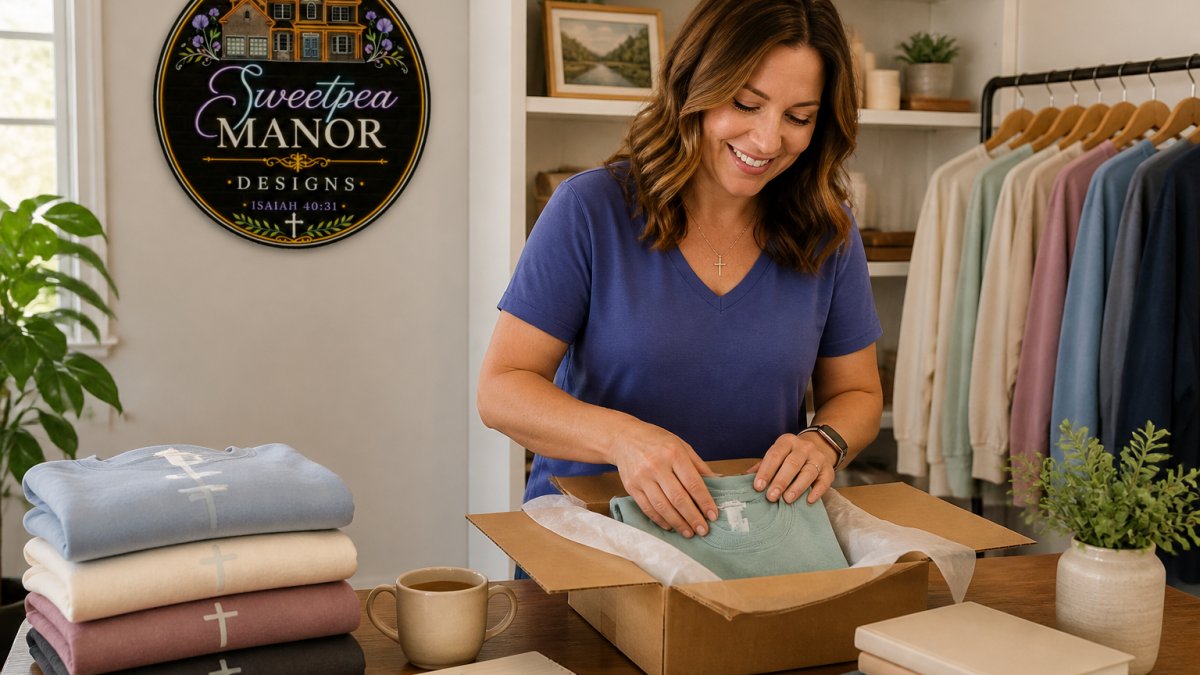
At Sweetpea Manor Designs, we make that choice easy. As a small mom-and-pop shop, we offer faith-based apparel, home decor, and personalized gifts through our Shopify store, Etsy shop, eBay listings, TikTok shop, and our main website on Printify. Our autumn and Christmas collections are ready now, our product list is constantly growing, and every order is packed by hand with care. Visit us, browse the collection, and let your holiday shopping carry your faith with it.
Frequently Asked Questions
Why is it important to support small, faith-based businesses?
Supporting small Christian businesses aligns your purchasing power with your biblical values. These companies often prioritize ethical business practices, generosity, and service excellence over pure profit. When you buy from a mom-and-pop shop, you help a family fund their ministry, support their local economy, and create a witness for Christ in the marketplace. Your choices become a form of intentional consumerism that reflects a biblical worldview.
How does shopping at a small Christian business impact the local community?
Small businesses are the backbone of the local economy, creating jobs and keeping money within the community. A faith-driven business often goes further by donating to local charities, sponsoring church events, and offering a personal touch that large corporations cannot match. When you shop from a Christian-owned store, you support a family that is invested in the spiritual and economic health of their neighborhood.
What are the benefits of choosing faith-driven brands for holiday gifts?
Choosing faith-based gift ideas for holidays allows you to share your values with loved ones. A gift that reflects Scripture or Christian themes can encourage spiritual growth and serve as a gentle witness. Additionally, many small Christian businesses offer personalized items and curated selections that feel more meaningful than mass-produced alternatives, making your gift stand out.
How can I find and support Christian-owned mom-and-pop shops?
Start by asking your church community for recommendations, or search online for faith-based marketplaces and directories. Look for businesses that openly share their Christian values and are transparent about their story. Once you find a shop you trust, order directly from their website or social media, leave positive reviews, and tell others. Consistent support, not just during holidays, helps these small businesses thrive.